
Hay.chat: Product and Go-to-Market
From an empty backlog to a live product in 14 months, with 50+ features shipped and a 120+ page website.


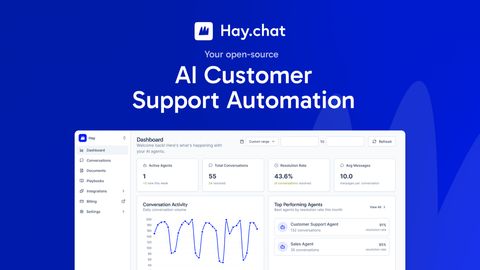
- Company
- Hay.chat
- Role
- Co-Founder, Product & Go-to-Market
- Timeline
- August 2025 to today
- Scope
- Product backlog, website, SEO, outbound, events
- Partners
- My co-founder (engineering)
In numbers
- 50+ features shipped in 14 monthly releases Co-directed with my co-founder, August 2025 to October 2026
- 16 live integrations, plus the built-in web chat 317 actions available to the AI agent
- 120+ live pages on the website 100+ revised and 20 built in one week, October 2026, plus 200+ backlinks
- 79% of support scenarios where AI cost more than the helpdesk A 40-scenario, seven-vendor pricing study I wrote up and pitched to trade press
At a glance
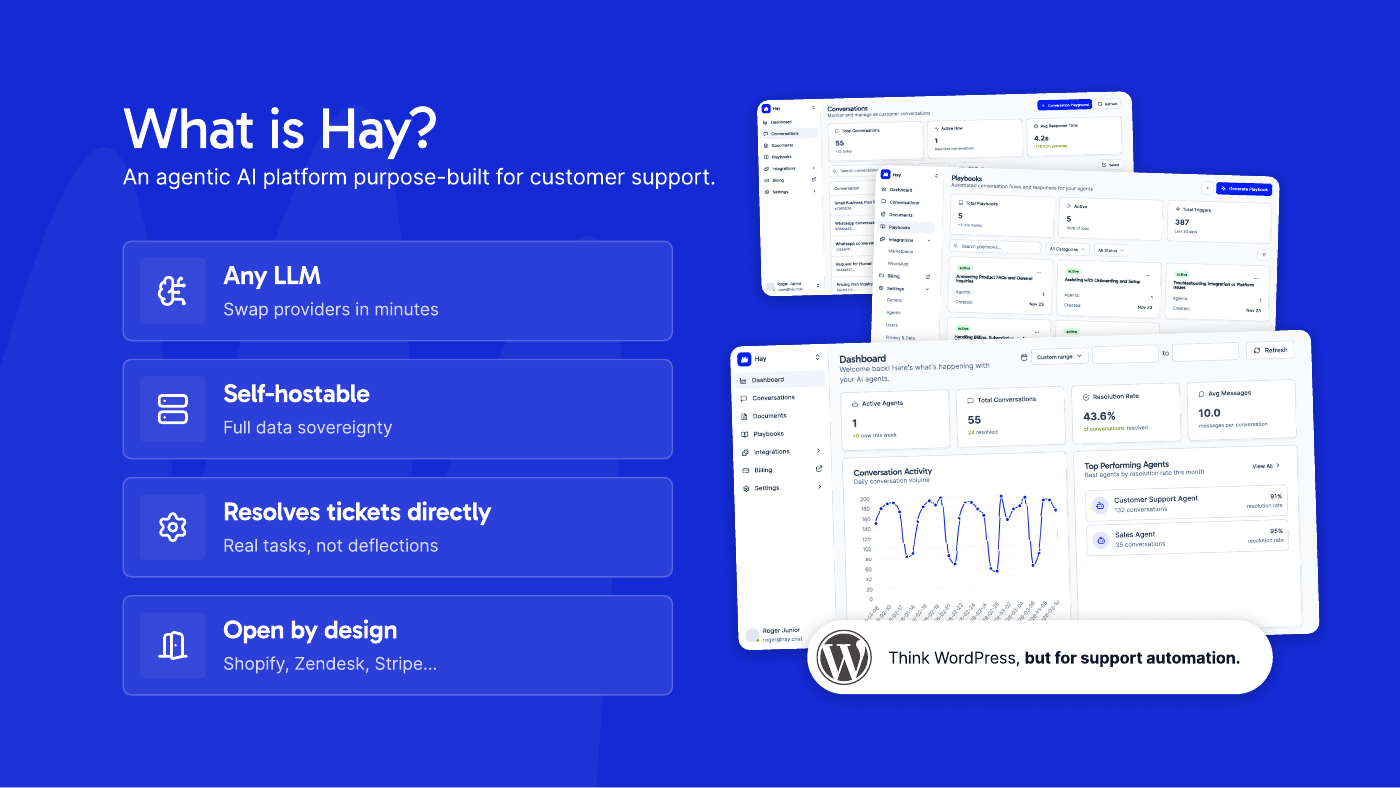
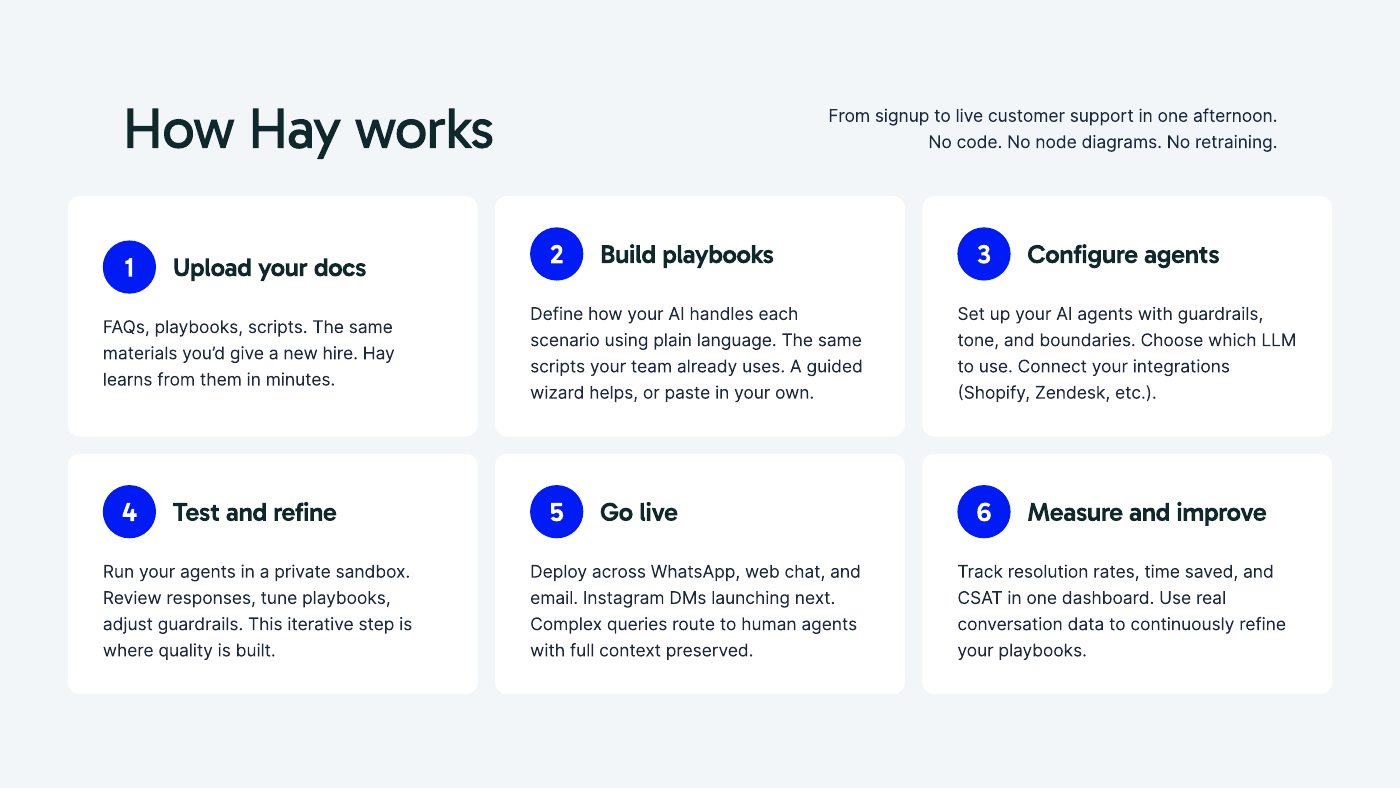
Hay.chat is an EU-hosted, source-available AI customer support platform for e-commerce and B2B SaaS. I co-founded it in August 2025 with an engineering co-founder who leads the build. I own what gets built and why, and everything that faces the market: the backlog, the pitch, the website, outbound and events.
The project
Context
- Two founders, no employees and no marketing team, up against Intercom, Zendesk and Gorgias.
- No backlog yet for the first release, and GDPR to get right from the start for an EU-hosted product.
- About 90% of search traffic came from people looking for an unrelated video chat app, and no commercial page ranked above position 15.
- Web Summit 2025 showed real demand, but our first version wasn't ready for it.
My decisions
- We chose to rebuild rather than sell what we had. In January 2026 we re-engineered the platform, from the engine to every integration.
- I wrote every feature down before anyone built it, as a user story with acceptance criteria and a definition of done, so my co-founder could pick up a ticket and build without a meeting.
- I audited our 15 go-to-market plans against the backlog. The highest-ranked plans had the emptiest epics and stale assumptions, so I re-sequenced the marketplace launches.
- I kept our claims honest. I cut traction claims we couldn't stand behind from the pitch, retired the pilot language once the pilot programme ended and described Hay as source-available, not open source.
Results
- A live, EU-hosted product 14 months after the first backlog, with 50+ features over 14 monthly releases and the GDPR work shipped between December 2025 and April 2026.
- A place in the Irish final of the Startup World Cup, and 67 qualified leads from Web Summit Lisbon 2025.
- Early search gains by October 2026: Google impressions up 19% in 28 days, and a key comparison post back on page one.
What I owned
- Wrote 164 of the 213 product issues, including the 96 user stories the first release was built on.
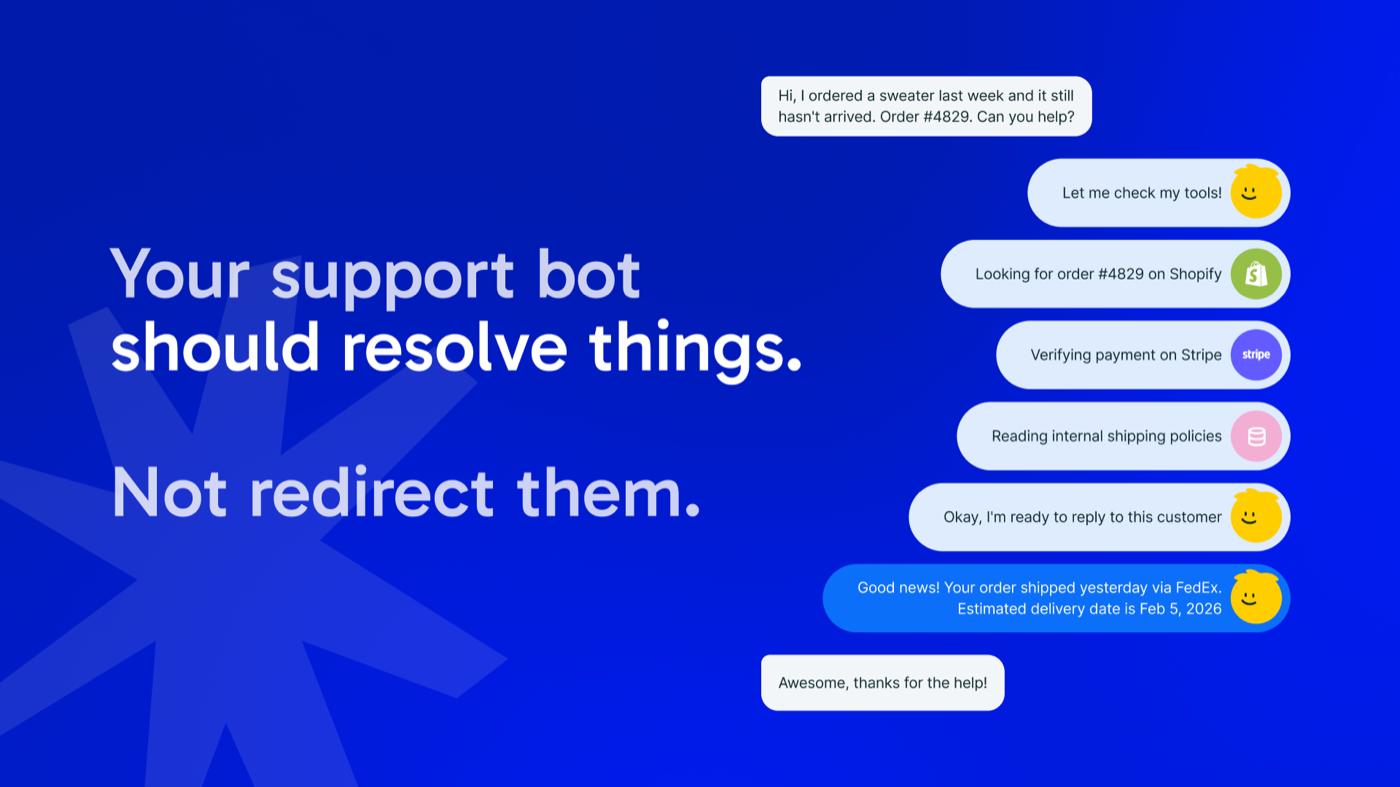
- Owned the integration roadmap from spec to launch: 16 live integrations, including Shopify, Zendesk, HubSpot and Stripe, plus the built-in web chat. I built the Wix integration myself.
- Wrote and delivered every Hay pitch and deck, on stage and on camera.
- Led the website end to end: SEO strategy, keyword research, content and the release of every change.
- Ran outbound and events, from six segmented campaigns and 20+ directory listings to booth pitches and CRM follow-up.
In pictures
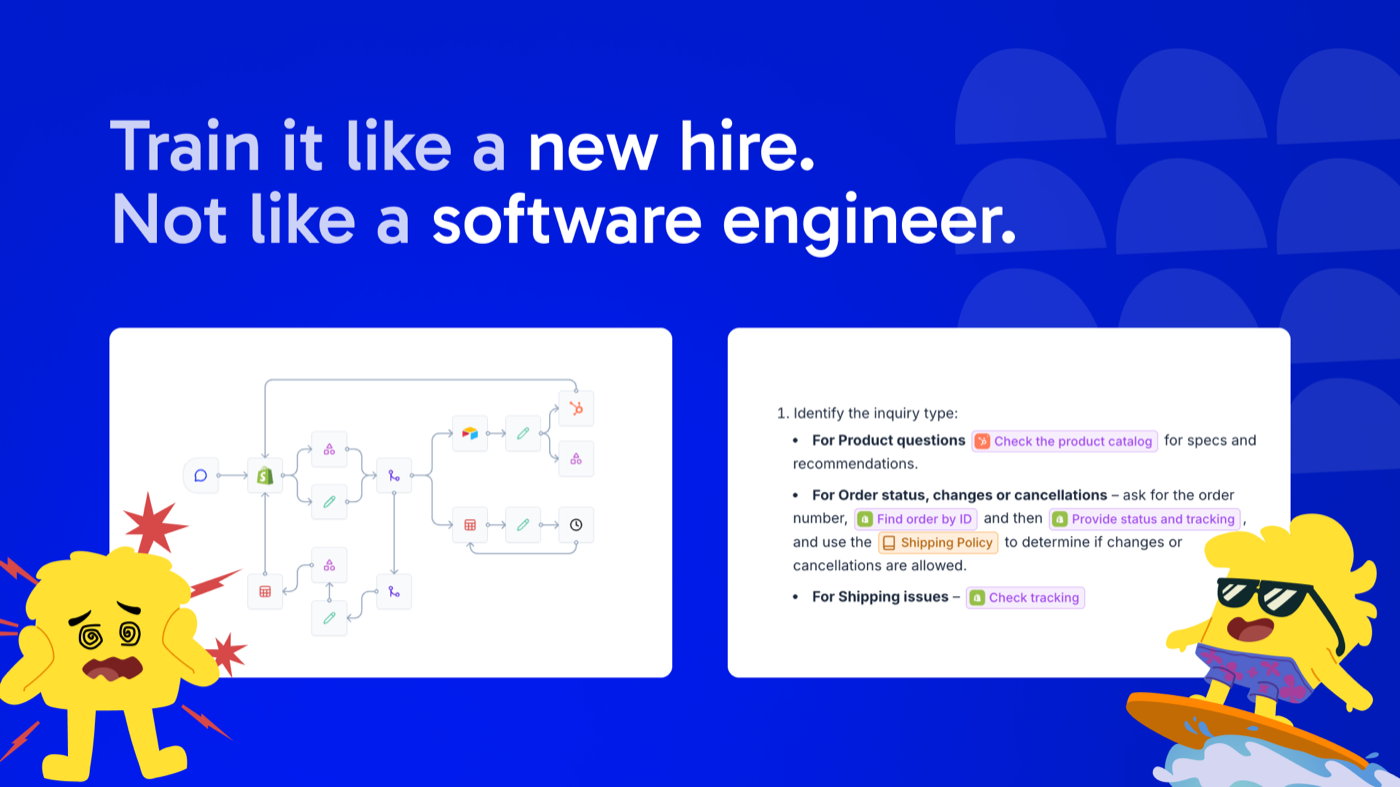
What I'd do again
- Write it down before anyone builds it. Every feature started as a user story with acceptance criteria, so two founders always worked from the same plan.
- Check the live search results before writing a page. Difficulty scores alone gave false positives, so I classified 55 results pages by hand.
- Treat AI as the production team. I write the brief, review the output and decide what ships.
More detail
Product
I opened the Hay backlog on 27 September 2025. It included a full GDPR epic from the start, because the EU-hosted positioning depends on it: data subject requests, retention, redaction, data residency and a subprocessor registry among them. Almost all of it shipped between December 2025 and April 2026.
Bigger ideas went through a research spike and a go/no-go gate before any build. I also ran written QA passes with acceptance criteria on five integrations before they shipped. We planned releases in Jira until summer 2026, then moved to direct product reviews between the two of us.
Website and search
The 31 August 2026 baseline showed the problem: most search traffic was brand confusion. I refocused the site on real buyer searches, with one page per search meaning, each checked on the live results page first. That meant integration pages, compare pages, a glossary, guides and a press section, plus the technical work behind them. I directed Claude Code as the build team through 32 scoped work packages, each with a written brief that I reviewed before it merged. By 22 October, 28-day Google impressions were up 19% to 9,056 and a key comparison post had moved from position 9.1 to 4.9.
Pitching, outbound and events
For the Startup World Cup at Dublin Tech Summit I cut the pitch from 6:01 to 4:48 to fit a five-minute slot, and we made the Irish final. For SIM Conference in Portugal and Dublin Tech Summit I ranked the goals (press first, then customers, then partners) and left investment out. I wrote the offer cards to stay useful for follow-ups through Q3. At Web Summit Lisbon 2025 my co-founder and I screened about 300 contacts by hand, which gave us 67 qualified leads. Outbound ran as six segmented Lemlist campaigns on two new sending domains, warmed up before launch.